


Authored by: Gonzalo Rodriguez Del Valle, CFA, SVP Portfolio Management and Investment Strategy Director
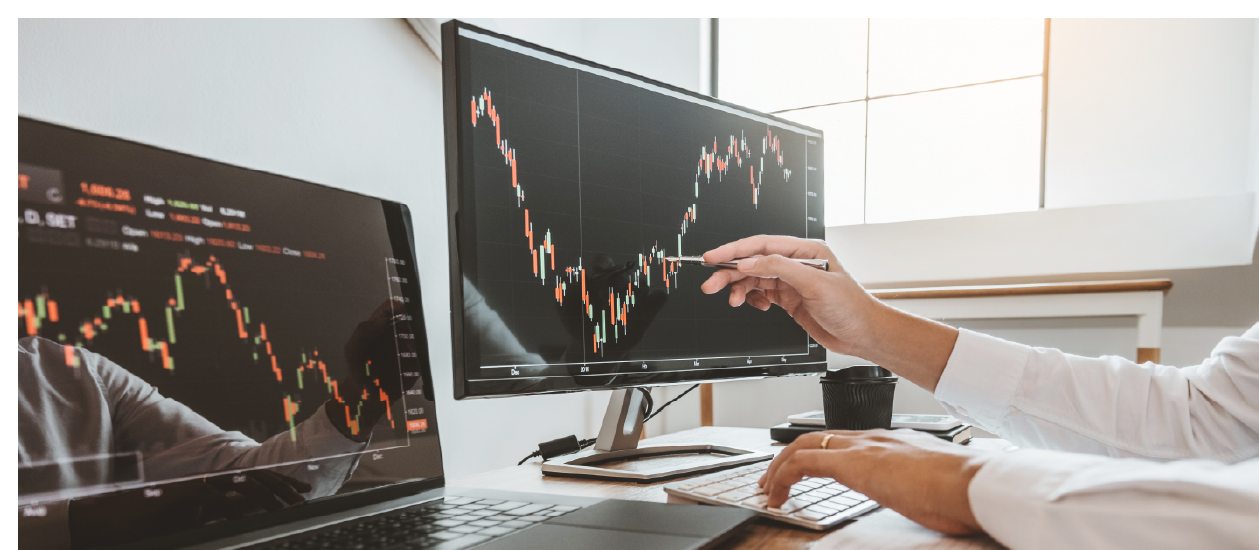
Friday's market sell-off was a reminder that strong economic data does not always mean higher stock prices, or at least not in the short term. On June 5, U.S. stocks fell sharply after a stronger-than-expected jobs report led investors to reconsider their outlook for interest rates. The S&P 500 fell about 2.6%, the Dow Jones Industrial Average dropped 1.4%, and the Nasdaq Composite plunged 4.2%, which was its largest single-day point decline in a year. In total, roughly $1.8 trillion in market value was erased from S&P 500 companies in a single session.
For long-term investors, the question isn't whether selloffs like this happen, because they always do. The real question is what drove this move and whether it changed the broader outlook.
So, What Happened on Friday?
The main catalyst was the May employment report from the U.S. Bureau of Labor Statistics. The economy added 172,000 nonfarm jobs, more than double the roughly 80,000 economists had expected. The unemployment rate remained steady at 4.3% while average hourly earnings rose 0.3% for the month and 3.4% year over year. Both readings were in line with expectations.
Adding to the signal, prior months were revised significantly higher: March was revised up from 185,000 to 214,000 jobs, and April from 115,000 to 179,000. Combined, there was a total upward revision of 93,000 jobs. Taken together, this marked the strongest three-month stretch of job growth in more than two years.
That is a healthy sign for the economy. But for markets that had been hoping for eventual rate relief, the stronger labor market was unwelcome.
Why Did Good News Hurt Stocks?
Markets have been focused on where interest rates are heading in the short to medium term. When economic data comes in stronger than expected, investors often assume the Federal Reserve will keep rates higher for longer or may even need to raise them further to keep inflation in check. That is exactly what happened on Friday.
Treasury yields moved sharply higher following the report. The 10-year Treasury yield climbed to 4.52%, while the 2-year yield (which is closely tied to Fed policy expectations) jumped 12 basis points to 4.16%. According to CME FedWatch data, markets are now pricing in a 50% probability of a rate hike by late October and nearly 67% by December. Goldman Sachs pushed its first expected rate cut all the way out to June 2027 and doubled its probability of a rate hike to 20%.
Higher yields matter because they affect how investors value future corporate earnings. When rates rise, future profits are worth less in today's dollars. That tends to weigh most heavily on the more speculative areas of the market trading at premium valuations, especially growth-oriented sectors with earnings further out into the future.
Why Tech Fell Harder Than the Broader Market
Technology and semiconductor stocks contributed the most to Friday's sell-off. The Nasdaq's 4.2% decline was its worst since April 2025, and the iShares Semiconductor ETF plunged 10%, which was its steepest single day drop since March 2020. Major chip names like Broadcom, Marvell Technology, Micron, AMD, and Intel fell between 8% and 17%. Nvidia and Tesla each dropped more than 6%. Even bitcoin fell below $60,000 for the first time since late 2024.
Many of these stocks are valued based on earnings expected well into the future due to accelerating growth, speculation, and market opportunity. They behave almost like long-duration assets, and when interest rates rise, investors usually become more uncertain and less willing to pay a premium for that future growth. After a 31% rally in the Nasdaq from its March lows, profit-taking is natural, particularly ahead of the SpaceX IPO expected next week.
It is worth noting that even after Friday's decline, the iShares Semiconductor ETF was still up almost 80% on the year which is a reminder that the recent pullback came after extraordinary gains.
The Bigger Picture: Inflation, Energy, and the Fed
The jobs report didn't occur in a vacuum. Several forces are converging to keep inflationary pressures elevated and the Fed cautious to cut rates:
• Geopolitical tensions: Ongoing conflict in the Middle East and the closure of the Strait of Hormuz have kept oil and energy prices elevated, impacting consumer prices.
• Sticky inflation: Core PCE inflation, which is the Fed's preferred measure, is projected to remain above 3% through 2026, well above their 2% target.
• Resilient labor market: The May jobs report, combined with upward revisions, suggests the economy may be exiting a period of sluggish hiring which reduces the urgency for rate cuts.
• Fed messaging: The Federal Reserve held rates steady at its April meeting (3.50–3.75%) and signaled it needs "further evidence" that inflation is sustainably declining toward 2% before easing again.
On June 4, the San Francisco Fed's latest economic outlook noted that GDP grew at just 1.6% annualized in Q1, below the 2.0% longer-run trend, and that "continued geopolitical instability raises the downside risks to the economy."
What Investors Should Keep in Mind
When markets see concentrated rallies, sharp pullbacks are to be expected. Friday's decline does not necessarily signal a weakening economic backdrop - in fact, the same jobs report that rattled markets also reinforced that the economy remains resilient. Here's a good way to approach the market:
• Avoid overreacting to a single day. Markets can shift on a moments notice based upon a dozen variables. One jobs report should not override a long-term investment plan.
• Review your concentration risk. Portfolios with heavy exposure to technology or semiconductor stocks may have experienced outsized moves on Friday. If one sector represents a disproportionate share of your portfolio, you may want to consider diversifying your positions to avoid concentration-related risks.
• Stay diversified across sectors and asset classes. Exposure to a broad mix of equities, fixed income, and alternative assets can help cushion the impact of sudden rotations. Sectors that are commoditized, like healthcare and finance, may behave differently than tech during rate-driven market shifts
• Keep your eyes on the horizon. One volatile week or day should not change your strategy and how its built, your time horizon, or your risk profile.
What We're Watching Next
In the coming weeks, several key events could further shape the interest rate and market outlook:
• FOMC Meeting (June 17–18): The Federal Reserve's next policy decision and updated economic projections will be closely watched. Markets do not expect a rate change, but Chair Warsh’s tone during the press conference and the updated "dot plot" could move expectations significantly.
• Consumer Price Index (CPI): The next inflation reading will help clarify whether the strong labor data is translating into persistent price pressures, or whether disinflation trends remain intact beneath the surface.
• SpaceX IPO: Set to be the largest IPO in history, SpaceX's debut could influence tech sector flows and risk appetite broadly. Some analysts even believe part of last week's selling was driven by investors rebalancing or freeing up cash to make room for the offering.
• Middle East developments: Any changes in the geopolitical landscape, particularly around energy, could shift inflation expectations and market sentiment quickly.
The Bottom Line
Friday's sell-off was not about a deteriorating economy, but about markets adjusting to the reality that interest rates may remain elevated, or even move higher, for longer than many investors had hoped. That creates uncertainty and short-term volatility, particularly in the riskier growth-oriented and highly valued areas of the market
For long-term investors, this is a good reminder to stay balanced, stay selective, and stay focused on your strategy and time horizon rather than headlines. Markets reward patience and discipline. The investors who maintain a diversified, goal-oriented approach tend to navigate these moments successfully.
Frequently Asked Questions
Q: Should I sell my stocks after a market sell-off?
Generally, reacting to a single day's decline is not advisable. Sell-offs are a normal part of market cycles. Decisions should be based on your long-term financial plan, risk tolerance, investment horizon, but not short-term volatility.
Q: Will the Federal Reserve raise interest rates in 2026?
It's possible but not certain. Markets are currently pricing in a meaningful probability of a rate hike later this year, especially if inflation remains above the Fed's 2% target. The next FOMC meeting on June 17–18 will provide more clarity on the Fed's direction.
Q: Why do higher interest rates hurt technology stocks more than other sectors?
Many technology companies are valued based on expected earnings years into the future. When interest rates rise, the present value of those future earnings decreases, which can lead to bigger declines in stock prices for growth-oriented companies compared to sectors with more certain near-term cash flows.
Have questions about how recent market moves may affect your portfolio?
Related Posts
.jpeg)



.jpg)

The inclusion of any hyperlink does not imply any endorsement, investigation, verification or monitoring by City National Bank of Florida of any information in any hyperlinked site. We encourage you to review their privacy and security policies which may differ from City National Bank of Florida. If you "Proceed", the link will open in a new window.